

Course Description
Advanced Child Passenger Safety & Minivan Seat Installation for NEMT Drivers is a specialized training course for drivers and attendants who transport pediatric passengers requiring child passenger restraint systems in minivans.
This course supports the child passenger restraint system training requirement under Minnesota Administrative Rule 8840.5910 Subpart 6a, which requires drivers and attendants transporting passengers who need a child passenger restraint system to complete training in the use of child passenger restraints and securement of child passengers.
This course is built specifically around NEMT and STS minivan operations, including vehicles such as the Dodge Grand Caravan, Chrysler Pacifica, Honda Odyssey, and modified wheelchair-accessible minivans.
Course Coverage
Minnesota Child Passenger Safety Requirements: Review child passenger restraint requirements, rear-facing and forward-facing rules, booster seat readiness, adult seatbelt readiness, and driver responsibility during NEMT transport.
NEMT Driver Liability: Understand the driver’s duty to verify safe restraint use, identify unsafe caregiver requests, refuse unsafe transport when necessary, and document non-compliant equipment or passenger safety concerns.
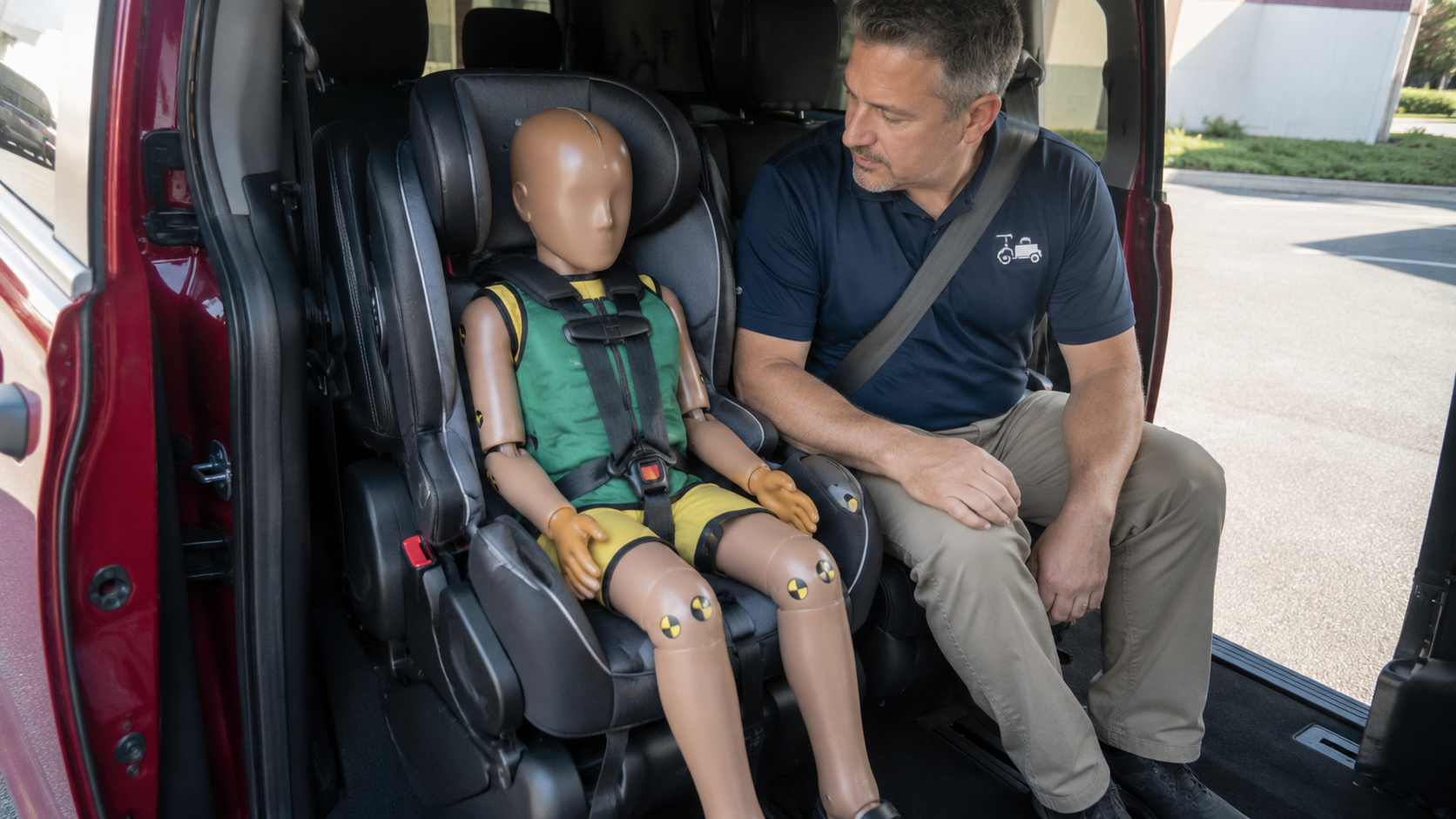
Child Restraint System Identification: Learn how to identify and properly use infant carriers, convertible seats, forward-facing harness seats, combination seats, high-back boosters, backless boosters, integrated child seats, and specialized restraints.
Minivan Seat Installation: Study minivan-specific installation issues involving captain’s chairs, third-row bench seats, LATCH anchors, seatbelt installation, ALR locking, top tethers, Stow ’n Go floor compartments, sliding-door access, and vehicle-specific seating limits.
Child Securement Procedures: Learn proper harness routing, chest clip placement, Pinch Test procedures, winter coat safety, restraint tightness checks, and high-risk errors that can lead to ejection or injury.
Inspection and Maintenance: Review how to check for expired, recalled, damaged, contaminated, or improperly used child restraints, including cleaning limits and post-crash replacement considerations.
Medical and Behavioral Transport: Learn safety procedures for pediatric passengers with physical disabilities, medical tubing, spica casts, behavioral challenges, habitual unbuckling, or “escape artist” risk.
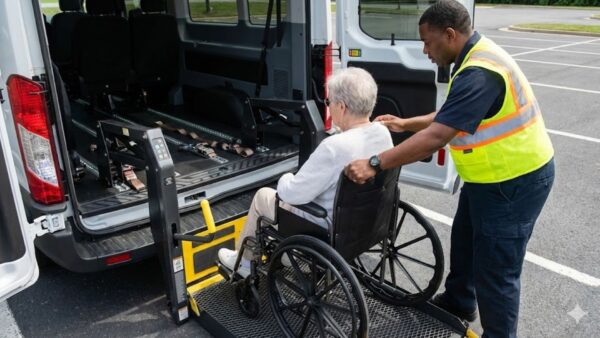
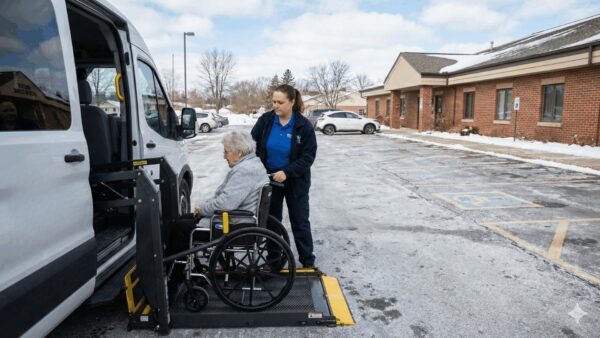
Wheelchair and Multi-Passenger Co-Transport: Understand how to manage child restraints in modified minivans with wheelchair ramps, L-tracks, mobility devices, medical equipment, and multiple passengers.
Emergency Procedures: Review child restraint evacuation considerations, jammed sliding-door scenarios, seatbelt cutter use, blocked access points, and post-incident reporting.
IEP and Specialized Vest Transport: Learn how school district IEP transport requirements may affect restraint selection, including the use of E-Z-ON style vest systems and heavy-duty floor anchor securement.
Important Training Notice
This course provides classroom/theory-based instruction and practical decision-making guidance. Drivers and attendants must still follow their employer’s policies, vehicle owner’s manual, car seat manufacturer instructions, dispatch procedures, and any required hands-on competency checks before providing service.
Completion Requirement
Students must watch the required lessons, complete the course content in sequence, and pass the assigned quizzes or knowledge checks to receive a certificate of completion.
Requirement: Minimum of 3 hours